Royalties on the real economy: Why iolite is buying what the market is throwing out

For years, investors bought perceived quality almost regardless of price. Software as a service was among the hottest themes, with the most prized businesses trading at more than 50 times sales.
In February, fears that AI agents could undermine software sold on a per-seat basis triggered a sharp sell-off. Nothing drives sentiment quite like price: falling shares fueled pessimism, prompting more selling and driving prices lower still. The software sector fell 30% from its peak, while several formerly celebrated names lost 70% or more of their value. Businesses with very different economics were swept into the same vicious circle simply because they shared the software label.
Meanwhile, headline indexes remain buoyant, supported by a narrow group of AI-related winners. Beneath the surface, inflation squeezes purchasing power, higher interest rates raise borrowing costs, fears of AI-driven job losses undermine confidence, and geopolitical uncertainty discourages investment. Outside the market’s favored names, share prices have suffered substantial damage. In some cases, I believe they now imply a deterioration far worse than the fundamentals justify.
That is where I am looking.
A royalty on sips, bites and swipes
Warren Buffett’s investment in Coca-Cola was, in effect, a royalty on sips. Every time someone opens a can, a small share of the economics accrues to the owners. The business does not need to reinvent itself every year. It needs people to keep doing what they already do.
iolite looks for similar economics in overlooked businesses: a recurring share of everyday spending, supported by competitive positions that are difficult to replicate.
Shift4 Payments (NYSE: FOUR) is a toll booth on the experience economy. It provides payment processing and point-of-sale software to stadiums, hotels, restaurants and luxury retailers. It processes approximately US$250 billion annually, while the merchants it already serves account for more than US$1 trillion in payment volume. Its technology handles payments at roughly three quarters of major league sports venues in the United States and has a substantial presence in the US hotel industry.

Shift4 uses software to secure sticky customer relationships and payment processing to monetize them. Much of its growth comes from acquiring software providers and merchant relationships, then migrating those merchants’ payment processing from legacy providers to its own platform. It captures fees merchants already pay rather than adding a new expense.

Offering hardware and software at or near cost helps win and retain customers while leaving competitors little room to undercut Shift4. Deep integration into merchants’ operations makes switching costly and disruptive. Payment fees generate cash to fund further acquisitions and growth.
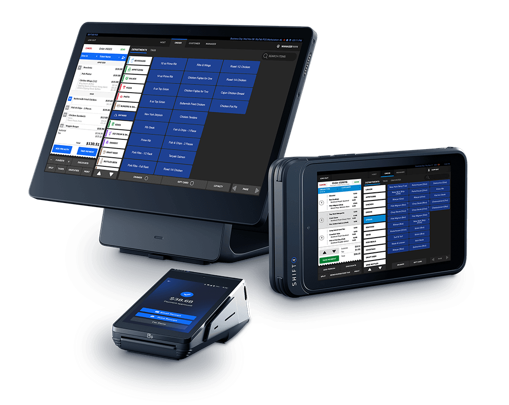
Yet its shares have been caught in the software sell-off. The distinction matters: Shift4 gets paid per transaction, rather than per seat. Its economics depend on the spending it processes, rather than the number of employees logging into an application. AI may change how a hotel operates or a restaurant takes orders. Guests will still pay for rooms, and diners will still settle their bills. The software may evolve, but the payment relationship remains valuable.
MTY Food Group (TSX: MTY) collects a more literal royalty on everyday consumption. Across approximately 7,000 North American restaurant locations, its brands sell everything from Thai curry and pretzels to ice cream and coffee.
Its franchisees face rising costs and pressure on consumer spending. MTY is exposed through restaurant sales and the health of its franchise network, but its largely capital-light model means it does not bear the full cost of operating the restaurants.
Despite continuing to generate substantial free cash flow and raising its dividend, MTY trades at a valuation more commonly associated with structural decline. Consumers may eat out less often or choose cheaper options. The appetite for convenient, affordable food is unlikely to disappear.
Aurizon Holdings (ASX: AZJ) earns its living moving goods that the economy needs. One of Australia’s dominant rail freight operators, it combines freight operations with a rail network supported by long-term contracts and regulator-approved returns on capital.
Aurizon trades at approximately 11 times free cash flow and offers a dividend yield of around 6%. Its valuation reflects concerns about the Australian economy and the outlook for bulk commodities. Meanwhile, the company retired 3.8% of its shares last year and has initiated another buyback.
The market appears less enthusiastic about owning the business than the business is about buying its own shares. AI may transform many industries, but goods still need to move.
Why the starting price matters
Durable economics are valuable, but the price paid is central to investment risk. Even an exceptional business can be a dangerous investment at a price that leaves no room for disappointment.
A high initial free cash flow yield is particularly attractive when growth requires little additional capital. More cash is then available to reduce debt, pay dividends or repurchase shares.
When a company buys back shares below intrinsic value, lower prices can benefit continuing owners. Each dollar retires more shares, increasing their proportional ownership without requiring them to invest another cent. The business must remain sound, and its balance sheet must be strong enough to support the purchases.
Ownership also matters. Several of iolite’s holdings have founders or substantial shareholders with meaningful capital at risk. Shift4’s founder owns more than a quarter of the company and has purchased additional shares this year.
Insiders can be wrong. Still, an owner committing personal capital at a depressed valuation is a more useful signal than a management team celebrating a rising share price.
Two pillars, different exposures
iolite’s portfolio currently rests on two pillars.
The first is energy. Its weight in major stock indexes remains low by historical standards, despite growing geopolitical risks and its essential role in powering AI. Population growth, expanding electricity demand and constraints on new supply support my investment case. Higher financing costs can further discourage investment in new production capacity.
The second is established, high-quality businesses that have fallen out of favor or are simply overlooked in a market driven by AI mania and red-hot speculation. Passive capital flows further fuel mispricing by directing more money toward the market’s largest winners. Elsewhere, businesses with durable cash flows, defensible competitive positions and room to grow trade at prices that fail to reflect those strengths.
The two pillars have different economic exposures. Companies like Shift4 and MTY depend on consumer spending, while iolite’s energy holdings can benefit when supply constraints drive fuel prices higher. Energy can therefore provide a partial counterbalance to the same pressures squeezing consumers and other businesses, including some protection if inflation or supply disruptions trigger a broader market sell-off.
What could go wrong?
Lower prices do not eliminate risk, and complementary exposures do not guarantee protection.
Shift4 and MTY carry meaningful debt, leaving them vulnerable to higher interest rates and prolonged consumer weakness. Franchisees could close restaurants, payment volumes could fall, and debt could limit flexibility precisely when investment opportunities are most attractive. Aurizon could face weaker freight volumes. Energy prices could fall sharply if demand weakens or supply proves more abundant than anticipated.
A severe recession could hurt both consumer spending and energy demand, while a broad market sell-off could drag down all of iolite’s holdings. The portfolio has several sources of return, but no immunity from losses.
The deeper risk is mistaking permanent deterioration for temporary difficulty. A business can look cheap for years while its competitive position erodes. Neither a familiar product nor a recurring revenue stream guarantees an attractive investment.
My task is to distinguish temporary pressure from lasting impairment: to assess whether cash flows are durable, balance sheets can withstand a difficult period, and prices adequately compensate for the risks. I also look for businesses that can use difficult conditions to strengthen their positions while weaker competitors retreat.
Markets do not always make these distinctions, particularly when investors are rushing for the exits. That creates opportunity, but it also demands judgment.
Building arks
Buffett put it well: “Predicting rain doesn’t count. Building arks does.”
Preparation can look like unnecessary caution while markets rise and stubbornness when they fall. Its value often becomes apparent only later.
In a world that keeps spinning faster and becoming less predictable, businesses built around things that change slowly arguably become more valuable.
That is why iolite looks for resilience in enduring activities: people buying coffee, paying for hotel rooms and attending sporting events; goods moving by rail; and the energy required to keep an economy, including AI, running. Technology may transform how people live and work, but these underlying needs remain.
I believe enthusiasm for a handful of fashionable themes has left substantial opportunities elsewhere. I do not need to predict when that enthusiasm will fade. My task is to own businesses that can keep generating cash, withstand difficult conditions and allocate capital sensibly while I wait.
iolite would rather own a share of the real economy’s recurring cash flows at prices that reflect neglect than pay almost any price for quality everyone already recognizes.
This article reflects the author’s views at the time of writing and is provided for informational purposes only. It does not constitute an offer, solicitation or recommendation to buy or sell any security or fund. iolite Capital may hold positions in the securities mentioned. The author’s views and iolite’s holdings may change as prices, facts or the interpretation of them change, ideally after the market has become considerably more enthusiastic about the businesses discussed.